Strength, endurance, and memory — built forms standing against time and tide. In these images, structure becomes a metaphor for solitude: steadfast yet vulnerable, enduring yet fragile. Each composition is an act of stillness in the face of motion.
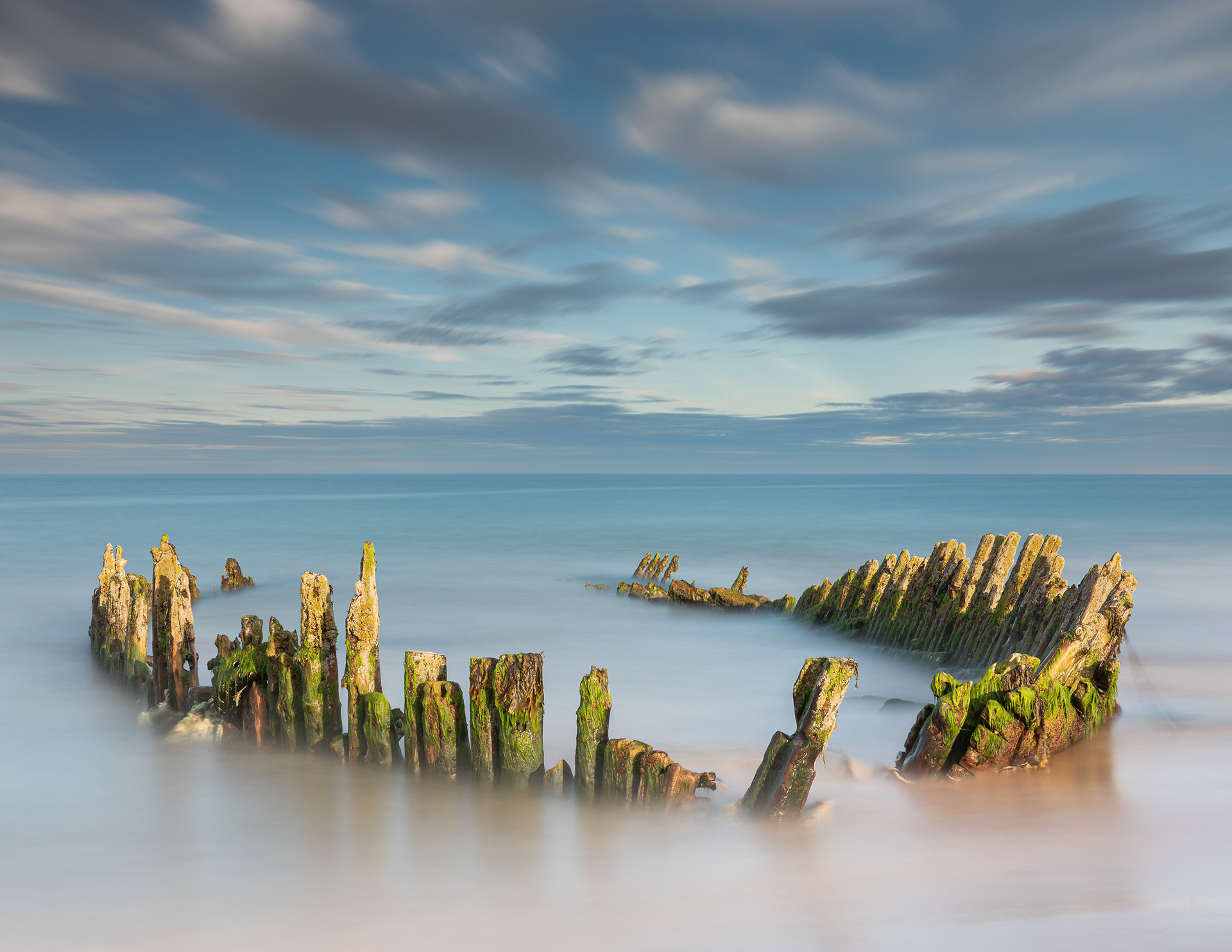
“Skeleton of the Sea”
The wreck of the Excelsior lies just offshore, its rib-like timbers rising through the tide like the bones of a long-forgotten sea creature. With each passing wave, the sea softens the scene into mist, revealing the stark contrast between the ship’s enduring frame and the continual motion that wears it away. Sunlight catches on the moss-covered wood, illuminating textures shaped by decades of exposure to salt, sand, and weather.
The wreck of the Excelsior lies just offshore, its rib-like timbers rising through the tide like the bones of a long-forgotten sea creature. With each passing wave, the sea softens the scene into mist, revealing the stark contrast between the ship’s enduring frame and the continual motion that wears it away. Sunlight catches on the moss-covered wood, illuminating textures shaped by decades of exposure to salt, sand, and weather.
This photograph is a meditation on resilience and memory — a structure that has outlasted its purpose, yet still holds its place in the shifting landscape of sea and sky. In the quiet between tides, the Excelsior becomes both relic and witness, its story written in the slow work of time.
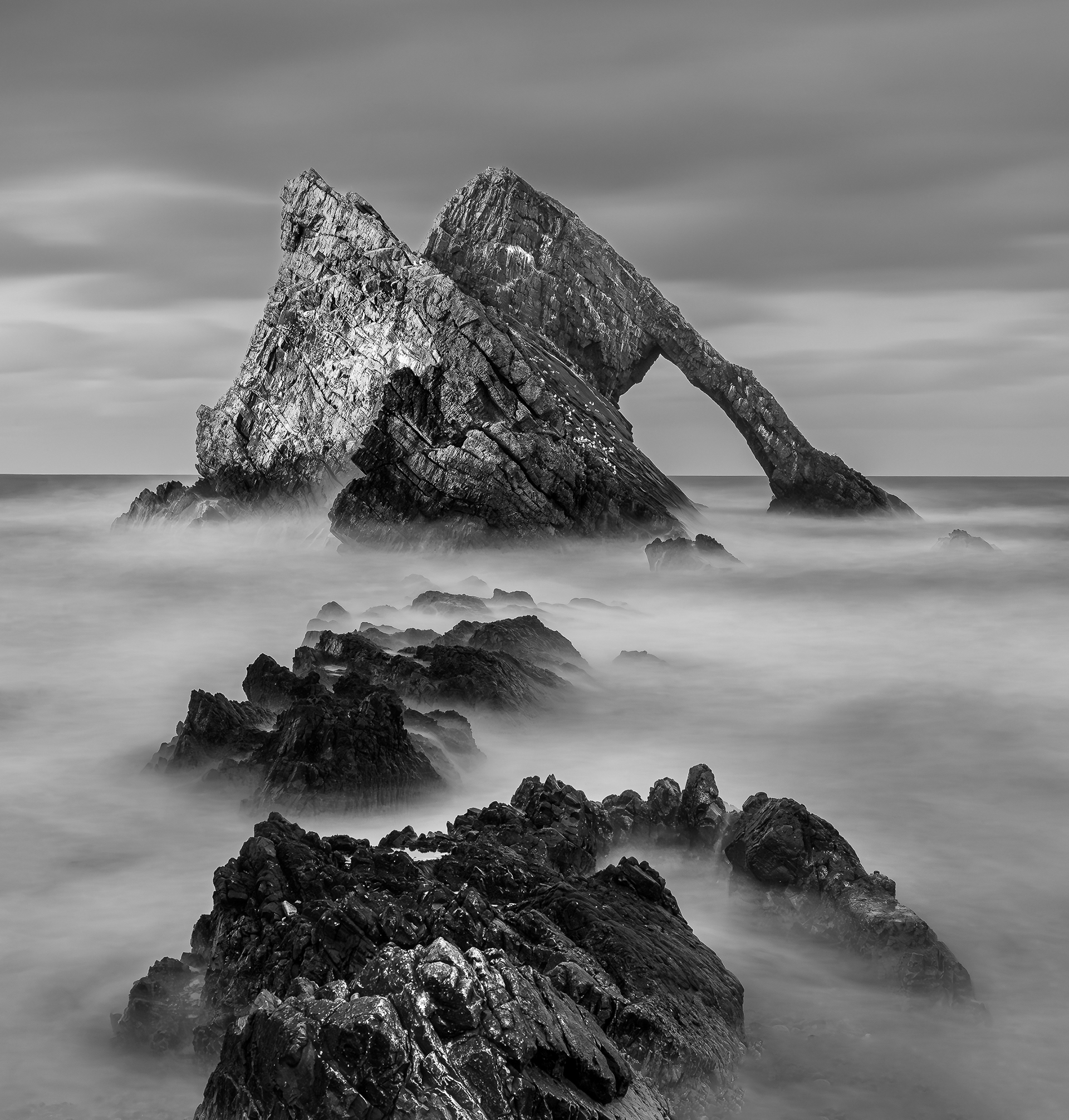
The Silent Harp
Bow Fiddle Rock rises like the fossilised frame of a forgotten instrument, its arch poised above the whispering tide. In this long-exposure moment, the sea softens to mist, revealing the rock not as an obstacle but as a solitary keeper of rhythm and time. Here, structure becomes silence — a patient form shaped by centuries of motion — and the landscape seems to pause, listening to the quiet song carved into stone.
Bow Fiddle Rock rises like the fossilised frame of a forgotten instrument, its arch poised above the whispering tide. In this long-exposure moment, the sea softens to mist, revealing the rock not as an obstacle but as a solitary keeper of rhythm and time. Here, structure becomes silence — a patient form shaped by centuries of motion — and the landscape seems to pause, listening to the quiet song carved into stone.
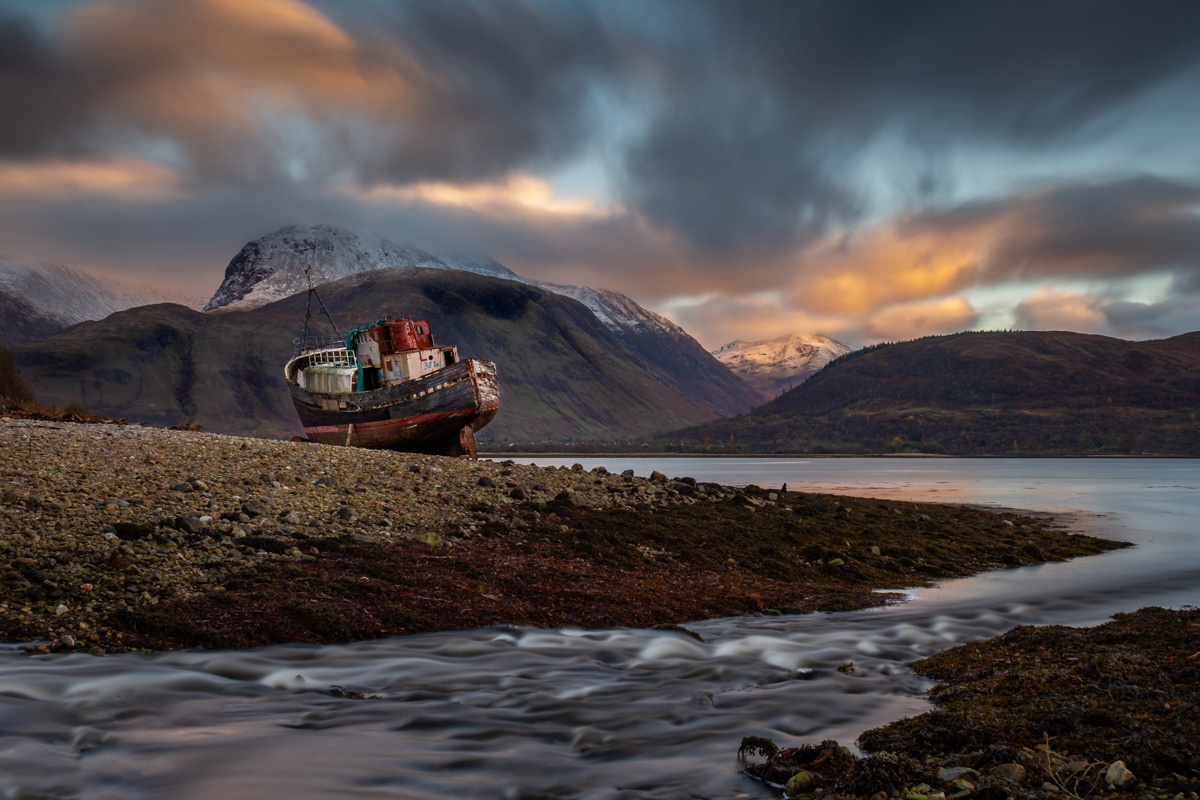
Last Mooring
Set against the snow-clad presence of Ben Nevis, this abandoned vessel rests on the tide line like a memory anchored in place. Its rusted hull and weathered timbers speak of journeys long ended, now held in quiet contrast to the enduring strength of the surrounding mountains. In the stillness of dawn light, the scene becomes a meditation on time — what moves, what remains, and what is inevitably reclaimed by the land.
This photograph was awarded Best Landscape Image in the Grampian Eye competition (2022).
Set against the snow-clad presence of Ben Nevis, this abandoned vessel rests on the tide line like a memory anchored in place. Its rusted hull and weathered timbers speak of journeys long ended, now held in quiet contrast to the enduring strength of the surrounding mountains. In the stillness of dawn light, the scene becomes a meditation on time — what moves, what remains, and what is inevitably reclaimed by the land.
This photograph was awarded Best Landscape Image in the Grampian Eye competition (2022).
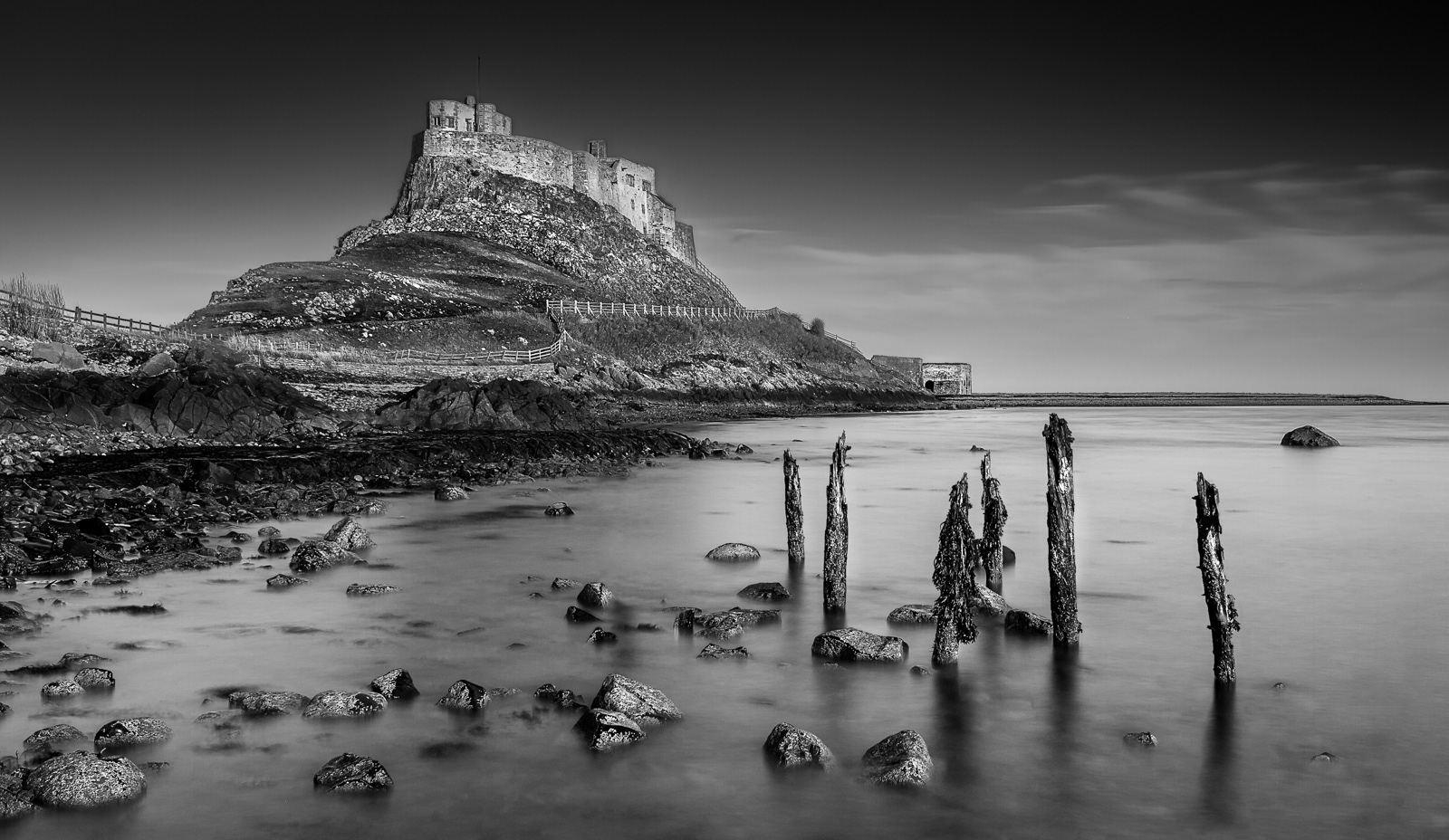
“Lindisfarne Sentinel”
Rising above the rocky shore of the Holy Isle, Lindisfarne Castle stands as a solitary witness to centuries of tide, weather, and human history. The softened water of the long exposure contrasts with the castle’s unwavering silhouette, revealing a landscape shaped by continual motion and enduring presence. In the foreground, the remnants of old timber posts echo this tension — structures worn down to their core yet still holding their place in the shifting sea.
This photograph reflects the quiet resilience of built forms set against the rhythms of nature. Lindisfarne becomes not just a landmark, but a meditation on strength, decay, and the slow passage of time along the edge of land and water.
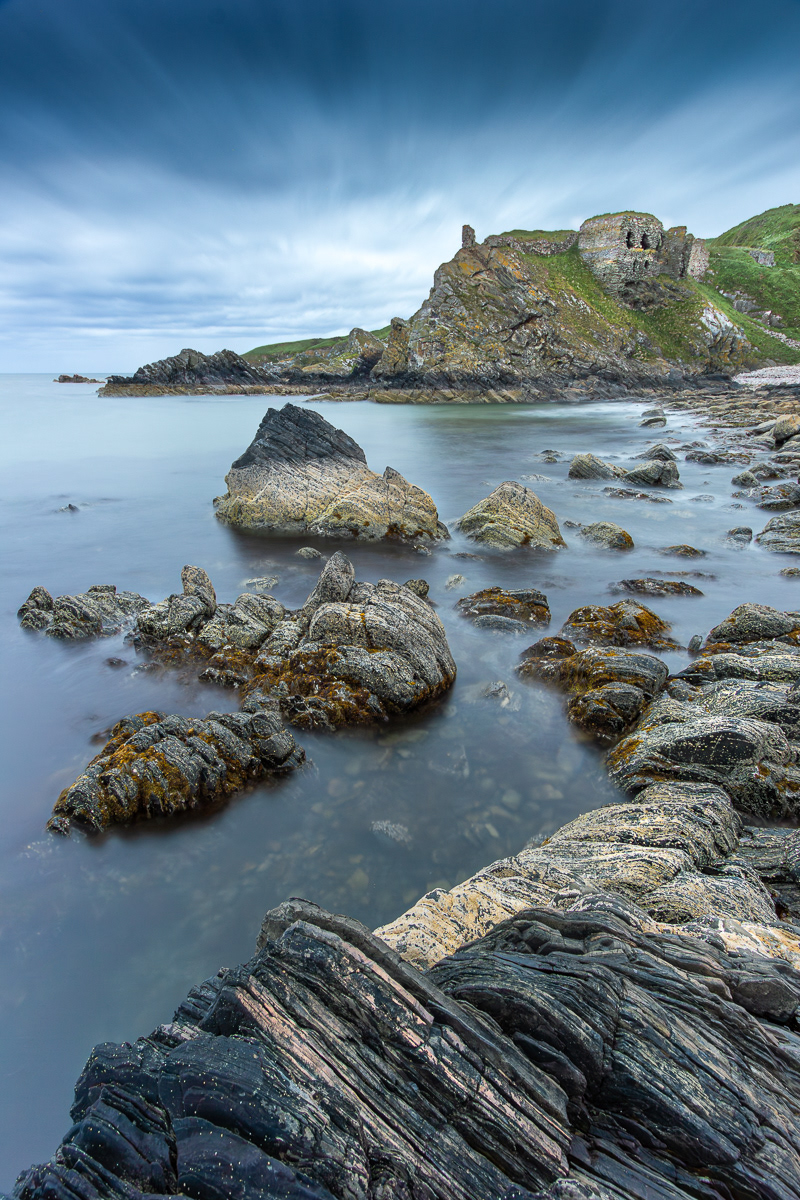
“Echoes at Findlater”
Perched on a jagged promontory above the North Sea, the ruins of Findlater Castle stand as quiet witnesses to centuries of wind, weather, and shifting tide. In this scene, the fractured rocks of the shoreline mirror the castle’s own battered resilience, their dark, folded strata guiding the eye toward the crumbling stone walls beyond. The long-exposure softens the restless sea, creating a moment of calm that contrasts with the rugged textures of the landscape. Echoes at Findlater reflects a place where history, geology, and solitude meet—an ancient stronghold slowly returning to the land that once sustained it.
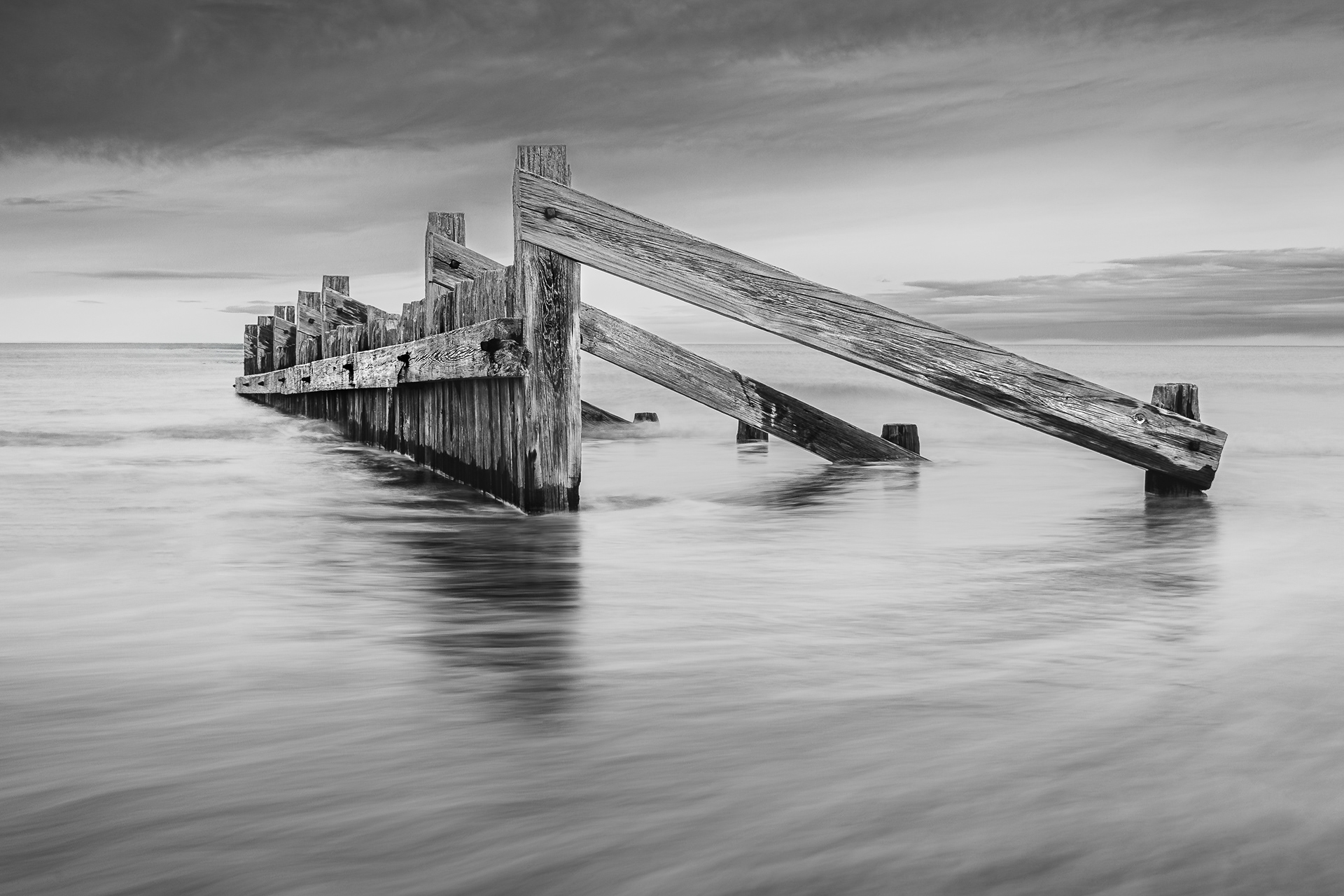
“Remnant”
Once a line of defence against the sea, this weathered breakwater now stands as a quiet memory of its former purpose. The long-exposure water softens into a shifting haze, drawing out the contrast between the timber’s rough, time-etched texture and the tide’s continual motion. Leaning, fractured, and enduring, the structure reveals a fragile resilience — a presence shaped as much by what has been lost as by what remains.
In this image, solitude becomes a testament to time. The sea moves, seasons change, but the remnant holds its place, offering a moment of stillness along the edge where motion never truly stops.
In this image, solitude becomes a testament to time. The sea moves, seasons change, but the remnant holds its place, offering a moment of stillness along the edge where motion never truly stops.
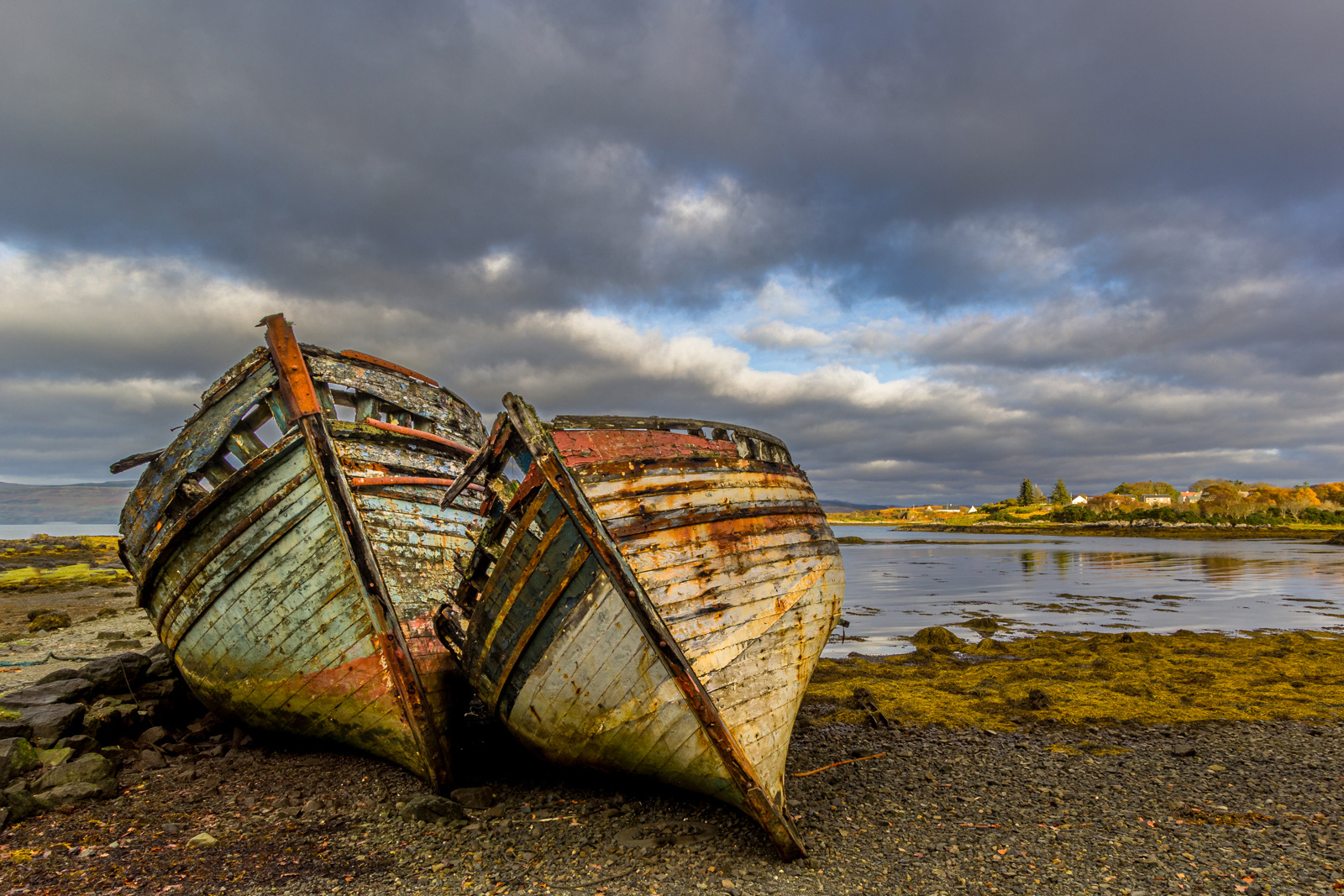
Resting at Salen
On the shores of Mull, these two weather-beaten boats lean gently into one another, their timbers softened by years of tide and salt. Once shaped for purpose, they now stand as quiet witnesses to time’s slow unravelling. In their fading colours and fractured lines lies a tender resilience — a reminder that even in decay, there is dignity, character, and a story still held by the shore.
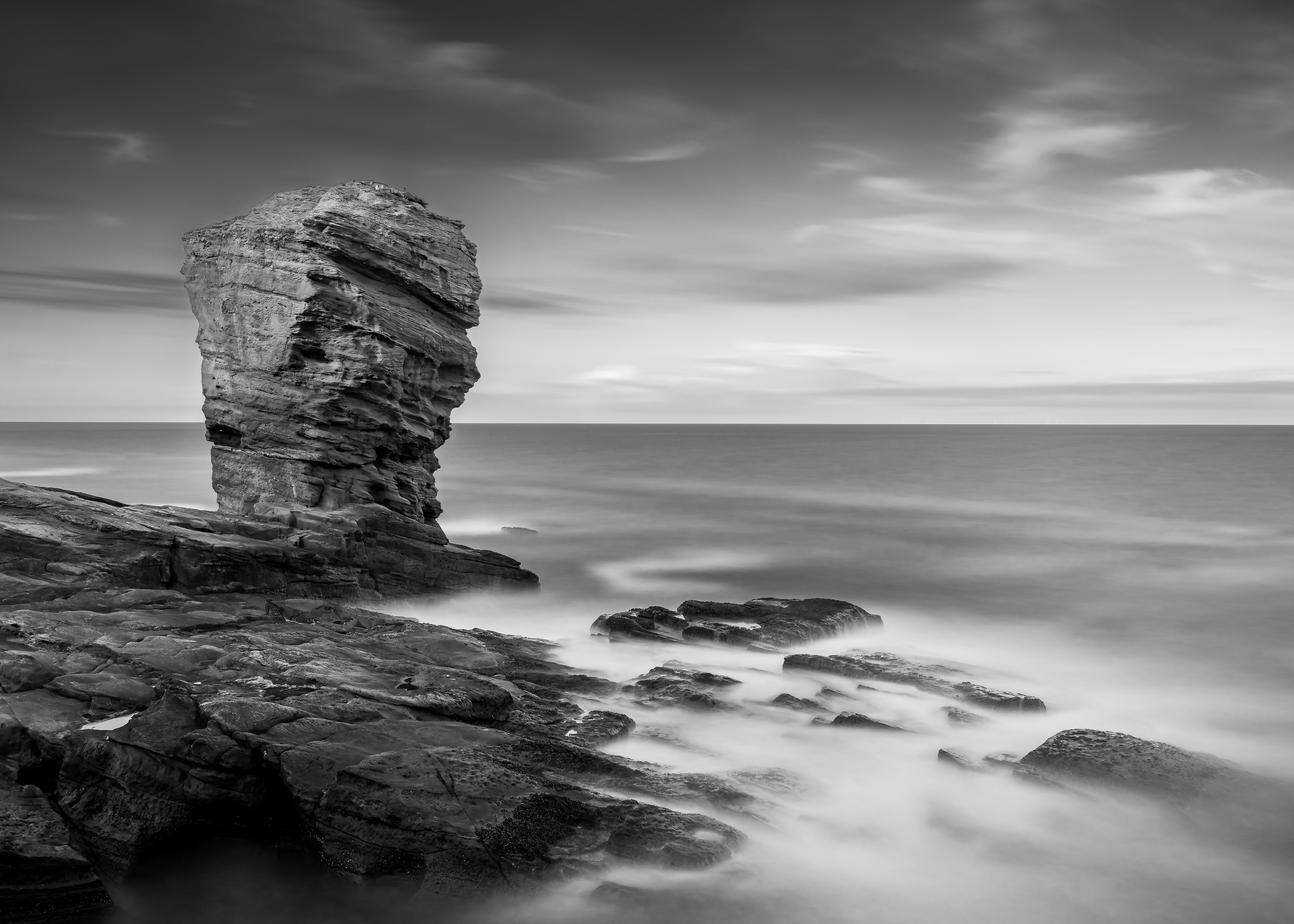
“The De’il’s Heid”
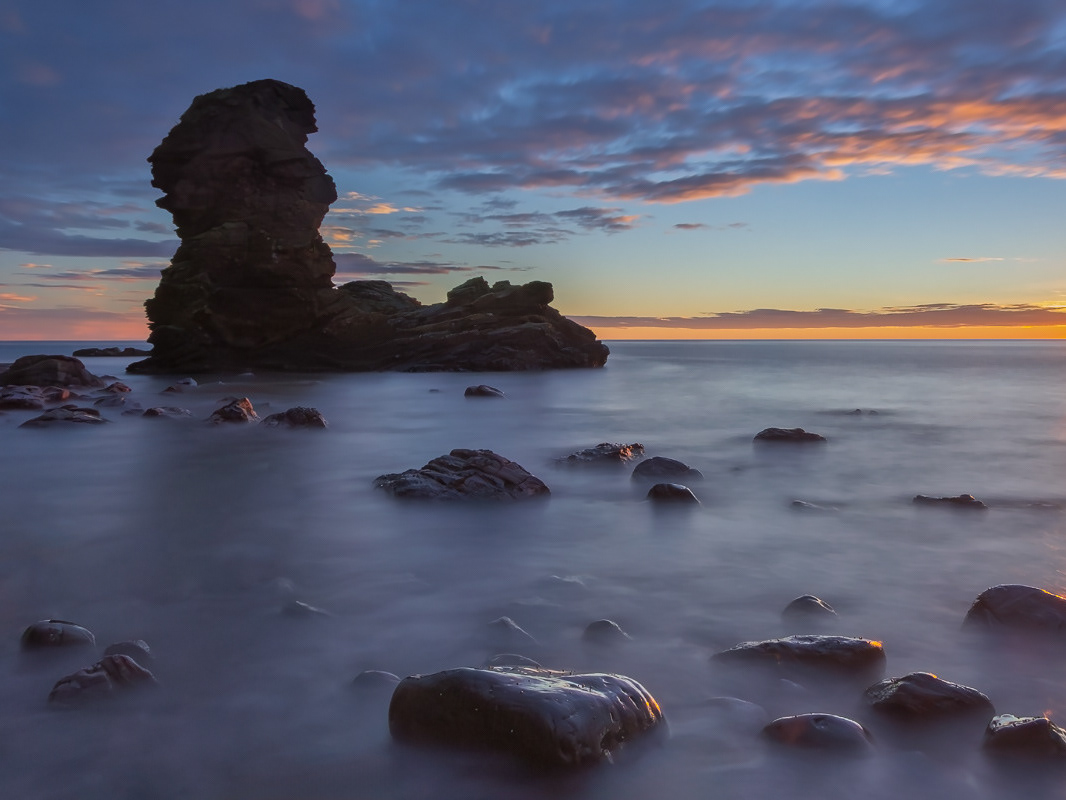
Rising from the shore at Arbroath, the De’il’s Heid stands like a solitary guardian shaped by centuries of wind and tide. In long exposure, the sea softens into a quiet veil, revealing the contrast between the rock’s unyielding presence and the endless motion that carves at its edges. Its weathered surface bears the memory of storms, seasons, and the slow work of time. This photograph is a meditation on endurance — a single form holding its place in a shifting world — where solitude becomes strength and landscape becomes witness.
Rising from the shore at Arbroath, the De’il’s Heid stands like a solitary guardian shaped by centuries of wind and tide. In long exposure, the sea softens into a quiet veil, revealing the contrast between the rock’s unyielding presence and the endless motion that carves at its edges. Its weathered surface bears the memory of storms, seasons, and the slow work of time. This photograph is a meditation on endurance — a single form holding its place in a shifting world — where solitude becomes strength and landscape becomes witness.
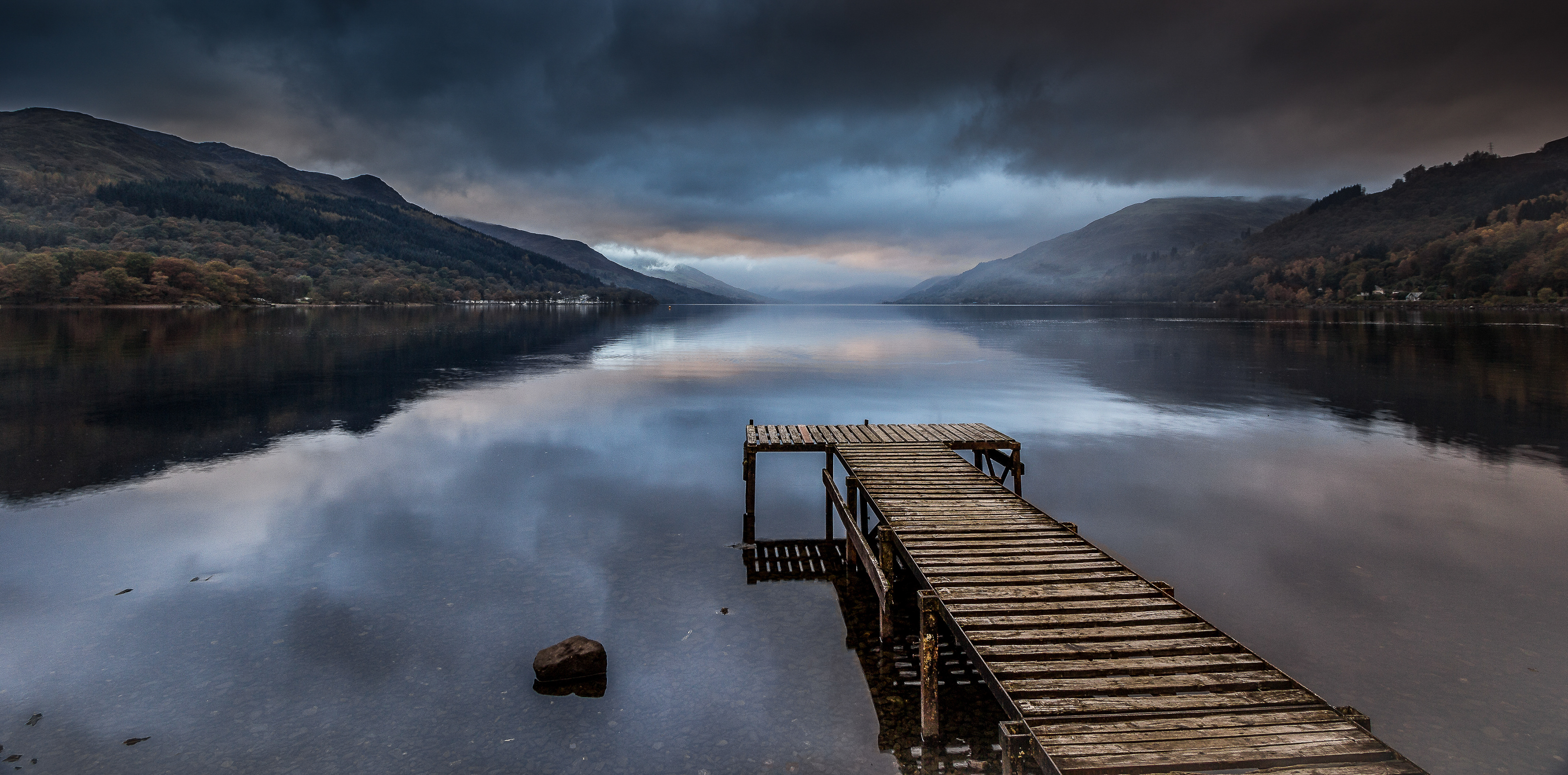
Stillness at Loch Earnhead
At Loch Earnhead, the old wooden jetty reaches quietly into the calm water, its worn planks echoing years of weather and waiting. The surrounding hills fade gently into mist, their muted tones reflected in the glass-smooth surface of the loch.
In this meeting of structure and silence, time seems to slow — leaving only the steady pull of perspective and the quiet invitation to pause, breathe, and look a little longer.
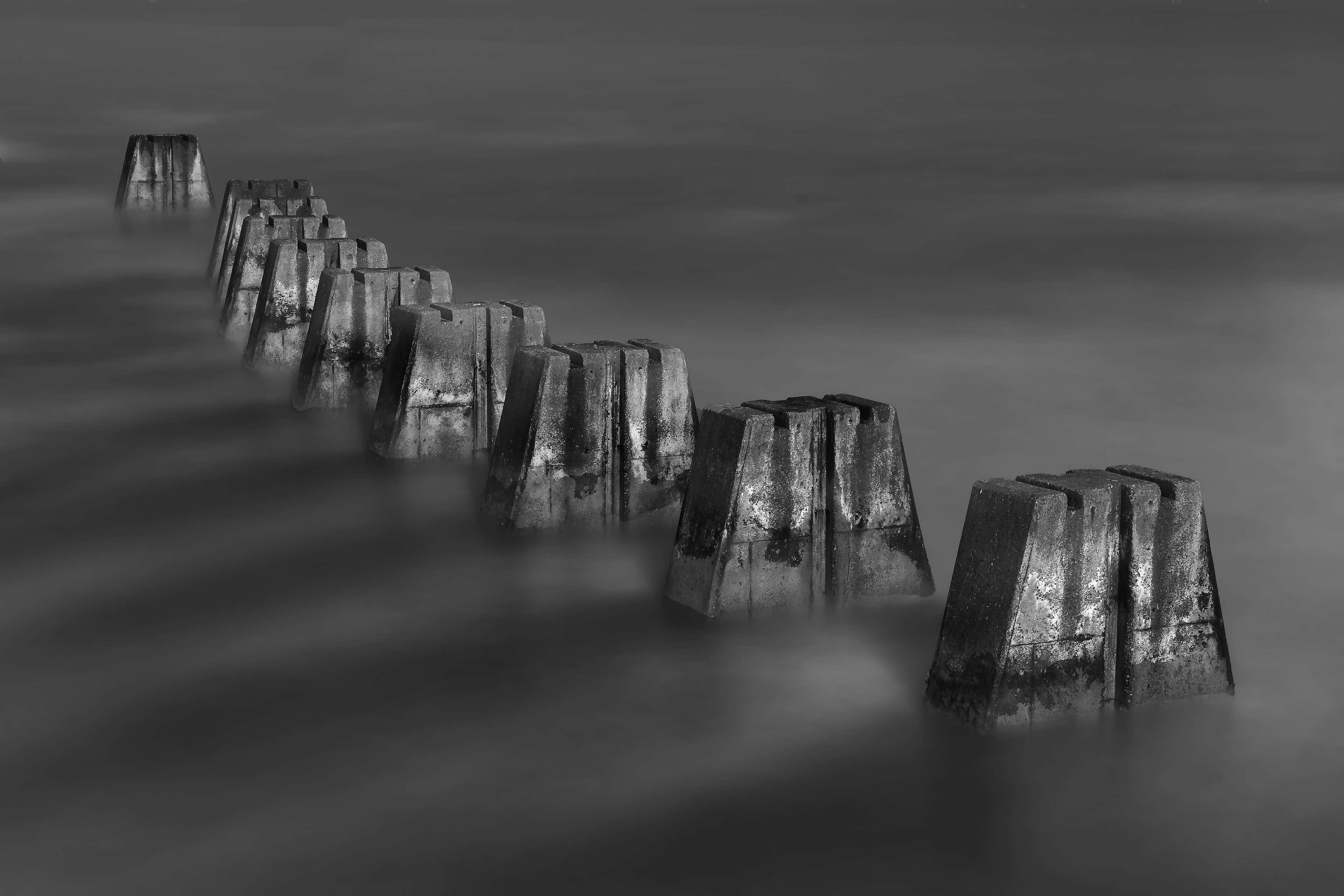
“The Last Line”
Set against the slow breath of the tide, these weathered sea defences stand in quiet formation — remnants of human intention meeting the persistence of nature. Their rigid geometry contrasts with the softened, mist-like water created by long exposure, revealing a tension between endurance and erosion. Each structure seems both steadfast and fragile, holding its place as time presses gently around it. In this stillness, the photograph becomes a meditation on resilience: what we build, what remains, and how the sea remembers every boundary we draw.
Set against the slow breath of the tide, these weathered sea defences stand in quiet formation — remnants of human intention meeting the persistence of nature. Their rigid geometry contrasts with the softened, mist-like water created by long exposure, revealing a tension between endurance and erosion. Each structure seems both steadfast and fragile, holding its place as time presses gently around it. In this stillness, the photograph becomes a meditation on resilience: what we build, what remains, and how the sea remembers every boundary we draw.
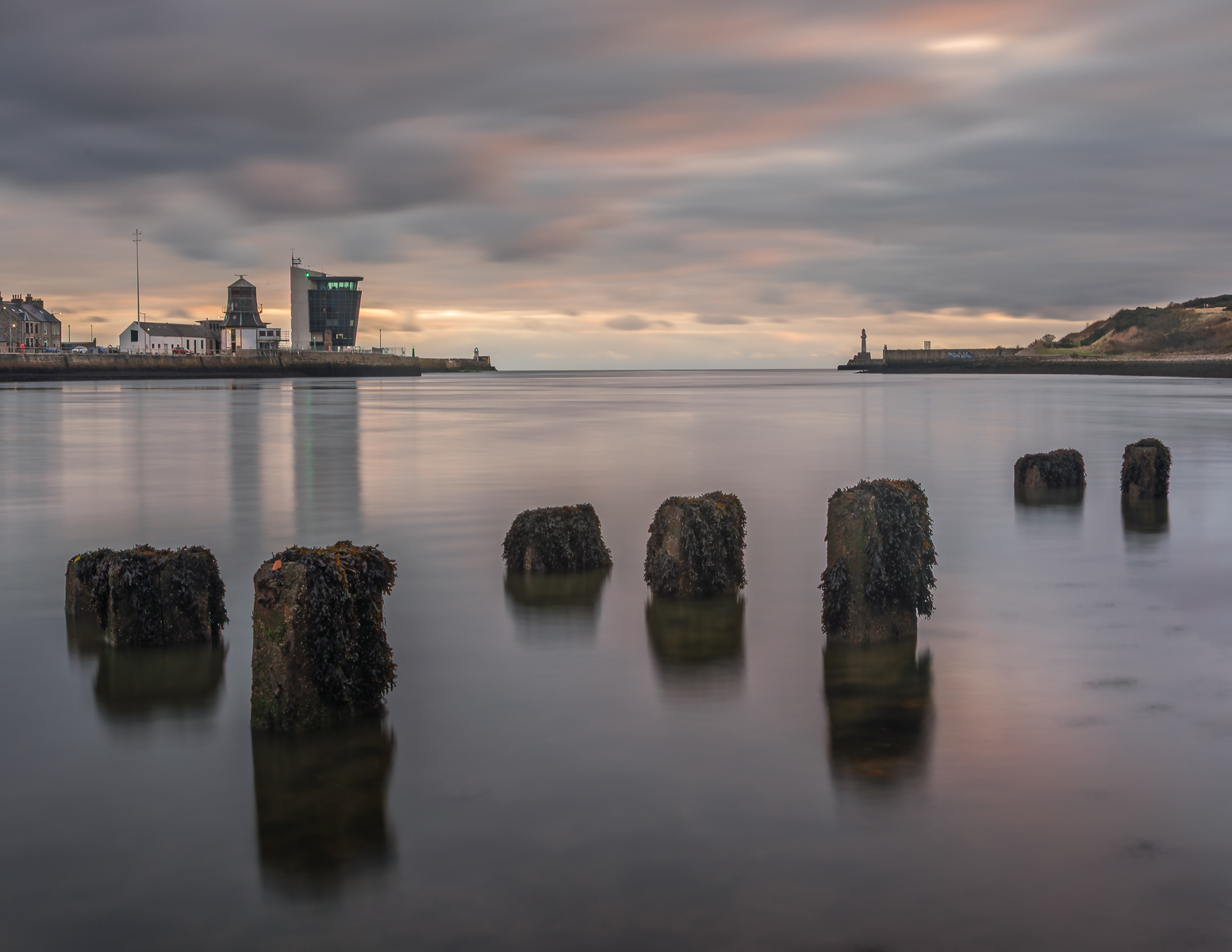
Harbour Remnants
The decaying pillars in the foreground stand as quiet markers of Aberdeen’s maritime past, slowly softened by tide and time. Set against the stillness of the harbour and the faint glow of dawn, they form a gentle dialogue between what endures and what fades. In the distance, modern structures and the lighthouse offer a subtle counterpoint — a reminder that the coast is always shifting, always renewing. This image reflects the calm resilience of a working shoreline, where history, structure, and solitude meet in a moment of quiet balance.
The decaying pillars in the foreground stand as quiet markers of Aberdeen’s maritime past, slowly softened by tide and time. Set against the stillness of the harbour and the faint glow of dawn, they form a gentle dialogue between what endures and what fades. In the distance, modern structures and the lighthouse offer a subtle counterpoint — a reminder that the coast is always shifting, always renewing. This image reflects the calm resilience of a working shoreline, where history, structure, and solitude meet in a moment of quiet balance.
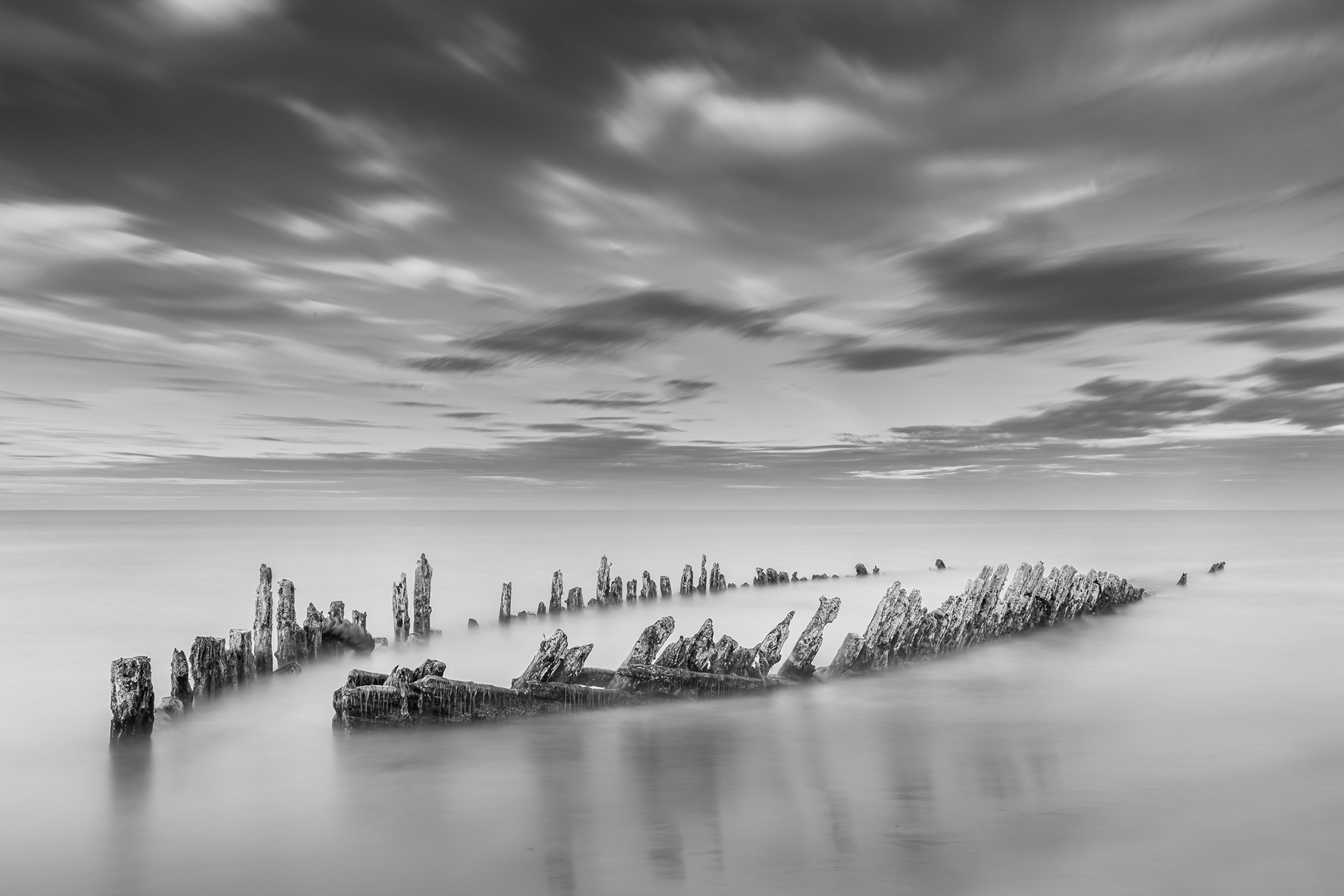
“The Bones of Excelsior”
In monochrome, the remains of the Excelsior take on an almost architectural presence — a quiet line of weathered timbers emerging from a sea smoothed by long exposure. Without colour, the wreck becomes less a remnant of a ship and more an abstract form shaped by tide and time. Its ribs trace a gentle curve across the water, guiding the eye toward the horizon where sky and sea begin to merge.
This image is less about the fate of the vessel and more about the serenity found in its transformation. The Excelsior stands here not as a memory of loss, but as a structure repurposed by nature — softened by light, surrounded by stillness, and held in balance between motion and calm. In this quiet moment, the wreck becomes part of the seascape itself: a subtle gesture in an ever-changing expanse.